Showing posts with label Marsha Mehran. Show all posts

Wednesday, April 1, 2020

Pomegranate Soup: The Roundup


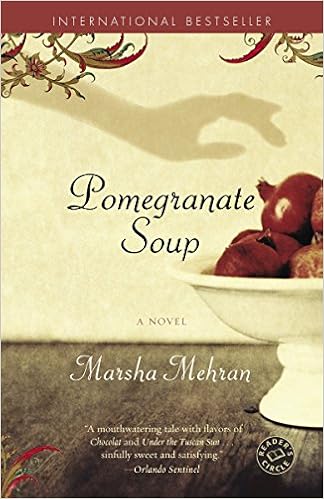
It's time for the roundup of Cook the Books' Club February-March 2020 edition for which we read the novel Pomegranate Soup by Marsha Mehran (2005).

The three Aminpour sisters, protagonists of the story, move to Ballinacroagh, County Mayo, Ireland and open the Babylon Café in the location that used to house an Italian bakery. In honor of the sisters' Persian food eatery, I will present our club's contributions as a menu, with the dishes in each section ordered alphabetically. For each, I will give you the official information (author, blog name and post title) and a quote from it — a taste: follow the link and read the author's take of the book and how the reading inspired the cooking.

Cook the Books Club's Pomegranate Soup-Inspired Menu

First Course:
Red Lentil Soup à la Tina
Red Lentil Soup à la Cathy

Second Course:
Fesenjoon (Chicken Stew with Walnut and Pomegranate Sauce)
Kabob Koobideh (Ground Meat Kebabs)
Kuku Sabzi à la Claudia (vegetarian)
Kuku Sabzi à la Simona (vegetarian)
One Skillet Cabbage
Torshi Tareh (Persian Sour Herb Stew With Marbled Eggs)

Accompaniment:
Lavash Bread

Dessert:
Elephant Ears
Persian Drizzle Cake

Make yourself comfortable, then enjoy the meal.
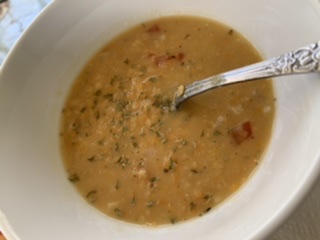


"You could substitute any middle eastern family trying to run a cafe in any small town, in Ireland or the U.S. for this plot... The plot plays out predictably with the women and their Irish neighbors, the cultural differences accepted. Well, by most people. Definitely a foodie book with over a dozen recipes included throughout. There were so many interesting dishes served up in this book but the recipe for lentil soup grabbed me right away. I had been wanting to make red lentil soup for a long time."


Cathy of Delaware Girl Eats prepared Red Lentil Soup

"Did you know that lentils are super healthy? I didn't but learned this in researching them for this post. In fact, this humble legume has shot up to the number 1 slot for healthy foods... Author Mehran writes about lentil soup: 'Red lentil soup, although quite seductive in scent, is as simple to make as its name suggests. In the recipe book filed away in her head, Marjan aways made sure to place particular emphasis on this soup's spices. Cumin added the aroma of afternoon lovemaking to the mixture for instance'. Now that's quite a statement... I cut this recipe in half from what was published in the book... This was totally enough to feed more than a few people."


Elizabeth of CulinUrsa cooked Fesenjoon (Social distance-adapted)

"As I was reading this novel, there was a scene in a crowded pub, and the thought went through my head, 'Why are all these people out in a group together?' Already the fears of viral spread had become ingrained in my thinking, and I have wondered when and how will I feel comfortable being with people again, touching the door handle of a store again?... There was not a single [recipe] for which I had all the ingredients at home, and, trying to minimize shopping trips, I didn’t want to venture out for anything. But I felt I could improvise enough for the fesenjoon. I have read many times about this iconic chicken stew with walnuts and pomegranates, and always wanted to make it. Despite all the changes and substitutions I made, it was fantastic!... It is often spelled fesenjan."


Camilla of Culinary Adventures with Camilla
prepared Kabob Koobideh (Ground Meat Kebabs)

"Though Mehran doesn't shy away from the traumas that can occur during political upheaval, she achieves a delicate balance of reality and sensitivity. It's quite a remarkable book that has me longing to read more about the Iranian revolution... I'm sharing my version of Iranian Kubideh or Koobideh, ground meat kebabs... Though this wasn't specifically mentioned in the book, it is something that I envision Layla packing on a picnic to go meet Malachy. And because I remember eating fresh herb salads at my Iranian friend's table, I decided to serve my kebabs with a thick herb paste, similar to Argentinian chimichurri."


Claudia of Honey from Rock prepared Kuku Sabzi (Persian herb frittata)

"In contrast to local descriptions, the background on the Iranian women, who are all of course beautiful, was interesting, their preparations to open The Babylon Cafe absorbing, together with accounts of their food and cooking, lovingly rendered, tantalizing, and well-written... Kuku Sabzi made a lovely, light evening meal with some steamed sweet potato (fresh bread or toast would also be good) and a glass of white wine. I discovered that at room temperature, the next day for lunch, the herbal flavors all came through beautifully."


Simona of briciole (your host) prepared Kuku Sabzi (Persian herb frittata)

"I was particularly intrigued by the description of 'a good apple khoresh, a stew made from tart apples, chicken and split peas' (page 60 of the hardback edition), but while I was searching for a recipe for that, I read about Kuku Sabzi, a kind of herb frittata traditionally prepared for Nowruz, the Iranian New Year that is celebrated on the spring equinox... The idea is that you can use greens and herbs you like and have available. A different combination means a different flavor, so this is a recipe that can be repeated without becoming boring."


"You get to know each of the residents as well as the back story of the Aminpour Sisters.  You will love some and you will hate some but you will, definitely become involved with all of them and their lives. I enjoyed this novel very much and the food descriptions of the meals prepared in this restaurant were heavenly... I absolutely adore Persian food but as I read a common thread that ran through this small town was that all the residents were sick and tired of eating cabbage for dinner.  As luck would have it, I had planned on having this Skillet Cabbage Dinner during the week I was reading this novel and it fit in so perfectly that I had to share it."


Deb of Kahakai Kitchen
prepared Torshi Tareh (Persian Sour Herb Stew with Marbled Eggs)

"There are delicious recipes woven into the chapters of book (why I am so disappointed that I couldn't find my copy) so the overall feeling is like a mix of Like Water For Chocolate and Chocolat, only with the clash of Irish and Iranian culture. I recommend it to foodies who don't mind a touch of magic in their books... I love everything about this stew--the exotic herby flavor, the acidity, and the touch of lime 'sourness' and the jammy eggs and creamy spinach. At first, I thought the smoked fish accompaniment was a little odd but it rounded out the flavors nicely."


"I prefer that authors stay realistic... or go full on Harry Potter magic... Despite my criticism, the book was good enough and I loved that the author included recipes at the end of each chapter. I decided to make a Lavash, using the recipe directly from the book.  The Lavash was delicious... The kids went crazy over the Lavash, begging me to make more. I used my favorite spice mix in this recipe (Everything Bagel), because I knew my family would love it. This bread is best enjoyed hot and fresh from the oven."


"The amount of food in this book is staggering... There’s so many herbs and spices, Persian food, Italian food and Irish food, I just couldn’t keep up... I decided on a sweeter recipe: Elephant Ears... They were interesting. I did not roll mine thin enough so they were more doughy (read donut) than a thinly fried treat... I would recommend this book to friends (and will).  It would make a great beach read (not that there’s anything wrong with that).  Mehran’s writing style is descriptive and sometimes romantic. (I mean that in a good way.)"


"I loved all the food content, the descriptions of the way that Marjan in particular nurtured those around her through her food. I liked that there were a number of recipes included in the book, and enjoyed the almost magical realism feel to it, focusing on the power of food to change the way that you are feeling. I guess I would call it magical realism lite for want of a better term... Overall, it's a readable book, without being amazing... I chose to top my cake with Turkish Delight Easter eggs rather than rose petals."

A great Thank you! to everyone who joined in this edition of Cook the Books.

I believe all the submissions I have received are presented in the roundup. However, mishaps are part of life, so if you find anything missing or in need of amendment anywhere in the roundup, please do let me know.

And now, I’ll turn things over to Deb of Kahakai Kitchen who is hosting the April-May edition in which we are reading Hippie Food by Jonathan Kauffman.

Arrivederci a presto!

Simona, of briciole

Saturday, February 1, 2020

February/March selection: Pomegranate Soup


I saw the novel Pomegranate Soup by Marsha Mehran (2005) at the annual Berkeley Library sale last year (a great chance to stock up on books). I remembered reading good reviews about it, so I added it to my purchases.

Pomegranate Soup is a story of people who have fled from their country of origin and recreated their lives in a different one. In the case of the three Aminpour sisters, the first country is Iran, the second Ireland. From the kitchen of an old pastry shop in the village of Ballinacroagh, County Mayo, the sisters share foods of their native country, like red lentil soup, abgusht stew, rosewater baklava. Not everybody like the "wafts of cardamom, cinnamon, and saffron float through the streets," though, and therefore, as you can imagine, adventures ensue.

From the publisher's website:
Infused with the textures and scents, trials and triumphs of two distinct cultures, Pomegranate Soup is an infectious novel of magical realism. This richly detailed story, highlighted with delicious recipes, is a delectable journey into the heart of Persian cooking and Irish living.
Ms. Mehran died in Ireland in 2014, aged 37, while she was working on the third book of the Aminpour sisters' series (the second, Rosewater and Soda Bread, was published in 2008). I am even gladder to feature Pomegranate Soup as our selection: reading what she wrote and shared with the world is, in my view, the best way to honor her memory.

Simona

Deadline for contributing your post: Tuesday, March 31, 2020.
Leave a comment below with a link to your post or email me at simosite AT mac DOT com.

Remember that anyone can participate in Cook the Books: simply pick up a copy of the selection from your local bookstore or library, take inspiration from said reading, cook and post the inspired dish. We look forward to having you read and cook along with in this selection period and beyond. New participants are always welcomed with open arms! (Leave a comment here or check out our Guidelines page if you have any questions.

This selection brings to a close the current set of four: be on the lookout for a post where we announce the next four selections.

Sunday, July 21, 2019

Announcing Our Next Four Selections

Are you ready? Here are the next four selections of our book club:

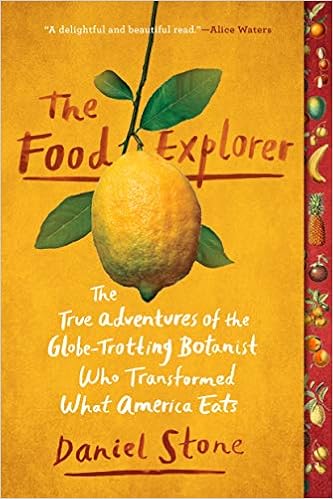
Deb (Kahakai Kitchen) opens the series with The Food Explorer:The True Adventures of the Globe-Trotting Botanist Who Transformed What America Eats by Daniel Stone (published February 2018) for the August/September 2019 edition


I’ll admit that I was the delay in the new book selection posting because I just couldn’t come up with a book I felt that strongly about hosting. Thankfully, Simona had a couple of great suggestions and I got very excited about The Food Explorer. Although I have a brown thumb for growing plants, I find botany incredibly interesting and combining it with the origins of food is even better. I read a sample on Amazon and was sold because there seems to be plenty of action mixed into the history.  

From the publisher:
The true adventures of David Fairchild, a late-nineteenth-century food explorer who traveled the globe and introduced diverse crops like avocados, mangoes, seedless grapes—and thousands more—to the American plate. 
In the nineteenth century, American meals were about subsistence, not enjoyment. But as a new century approached, appetites broadened, and David Fairchild, a young botanist with an insatiable lust to explore and experience the world, set out in search of foods that would enrich the American farmer and enchant the American eater. 
Kale from Croatia, mangoes from India, and hops from Bavaria. Peaches from China, avocados from Chile, and pomegranates from Malta. Fairchild’s finds weren’t just limited to food: From Egypt he sent back a variety of cotton that revolutionized an industry, and via Japan he introduced the cherry blossom tree, forever brightening America’s capital. Along the way, he was arrested, caught diseases, and bargained with island tribes. But his culinary ambition came during a formative era, and through him, America transformed into the most diverse food system ever created.
I think we'll have fun learning with and cooking with this one!
Aloha,
Deb

Deadline for contributing your post is Monday, September 30, 2019

For the October/November edition, Claudia (Honey from Rock) chose The Temporary Bride - A Memoir of Love and Food in Iran by Jennifer Klinec (published February 2017)


I have't much experience with Persian food, so it should be an adventure, right up our food alley anyway. Here's the Publisher's take on the book: 
A true story of forbidden love set against the rich cultural and political backdrop of modern-day Iran. 
Jennifer Klinec is fearless. In her thirties, she abandons her bland corporate job to launch a cooking school from her London apartment and travel the world in search of delicious recipes and obscure culinary traditions. Her journey takes her to Iran, where she seeks out a local woman to learn the secrets of Persian cuisine.  
Vahid is suspicious of the strange foreigner who turns up in his mother's kitchen. Unused to such a bold and independent woman, he is frustrated to find himself, the prized only son of the house, largely ignored for the first time. But when the two are thrown together on an unexpected adventure, they discover a mutual attraction that draws them irresistibly toward each other--but also pits them against harsh Iranian laws and customs, which soon threaten to tear the unlikely lovers apart. 
Getting under the skin of one of the most complex and fascinating nations on earth, The Temporary Bride is a soaring, intricately woven story of being loved, being fed, and struggling to belong.

Aloha,
Claudia

Deadline for contributing your post is Saturday, November 30, 2019

For the December 2019 / January 2020 edition, Debra (Eliot's Eats) has chosen the novel The Language of Flowers by Vanessa Diffenbaugh (April 2012)
  

I remember reading this book a few years ago and mentally making notes about all the food in the novel. At that time, I thought The Language of Flowers by Vanessa Diffenbaugh would make a good selection for Cook the Books. For some reason, the novel has languished inside my Kindle.  

The novel revolves around the character of Victoria. She's had a sad life and has aged-out of the foster care system. Victoria finds herself homeless and without any job prospects. But, she has the "language of flowers." Her gift lands her a job with a local florist and allows her to reconnect with her past while visiting the flower market.

The Language of Flowers is a cross between White Oleander by Janet Fitch (because of the foster care system depiction) and Garden Spells by Sarah Addison Allen (because of the power of the flowers; however, Victoria's "gift" with the language of flowers is more her education and knowledge versus a mystical talent).  

Besides many food references in the novel, you will find an education of the power and language of flowers (hearkening back to Victorian times) within the pages.

Debra

Deadline for contributing your post is Friday, January 31, 2020

To round up the list of selections, for the February / March edition Simona (briciole) picked the novel Pomegranate Soup by Marsha Mehran


I saw this book at the annual Berkeley Library sale and as I remember reading good reviews about it, I added it to my purchases. Pomegranate Soup is a story of people who have fled from their country of origin and recreated their lives in a different one. In the case of the three Aminpour sisters, the first country is Iran, the second Ireland. From the kitchen of an old pastry shop in the village of Ballinacroagh, County Mayo, the sisters share foods of their native country, like red lentil soup, abgusht stew, rosewater baklava. Not everybody like the "wafts of cardamom, cinnamon, and saffron float through the streets," though and therefore, as you can imagine, adventures ensue.

As I was preparing for presenting the novel to our Cook the Books Club, I read that Ms. Mehran died in Ireland in 2014, aged 37, while she was working on the third book of the Aminpour sisters' series (the second, Rosewater and Soda Bread, was published in 2008). I am even gladder to feature Pomegranate Soup as our selection: reading what she wrote and shared with the world is, in my view, the best way to honor her memory.

Simona

Deadline for contributing your post: Tuesday, March 31, 2020.

Remember that membership in our book club is open to anyone and we hope you will join us by reading these selections and creating inspired recipes. For more information about participating, click here.  

As always, specific announcement posts can be found at Cook the Books at the beginning of each two-month period and the current selection is always shown on the right side of the homepage.

To recap:

August/September: The Food Explorer by Daniel Stone (hosted by Deb at Kahakai Kitchen)


October/November: The Temporary Bride by Jennifer Klinec (hosted by Claudia at Honey from Rock)


December/January: The Language of Flowers by Vanessa Diffenbaugh (hosted by Debra at Eliot's Eats)


February/March: Pomegranate Soup by Marsha Mehran (hosted by Simona at briciole)


Happy reading and cooking!