Call of the Camino by Suzanne Redfearn is part travelogue, part family history, part sacred journey, part coming of age story and part family feud (more like a vendetta). Redfearn manages to keep the alternating tales of Isabelle and Reina separate but parallel and makes the reader want to know more about the two women: 1997 Isabelle and 2024 Reina.
2
I read the novel during the winter of 2025. As I read, I kept thinking this might make a good CTB selection. I finally decided to host it for the April/May round.
You can read more about the book here at Redfearn's website. (Redfearn walked the sacred trail herself.)
Wendy was first up with a delicious sandwich: a traditional Spanish Bocadillo.
This book inspired Wendy on a number of different levels:
I have always dreamed of walking the Camino. I know I will never have more than a month to walk the entire 500 miles, but I could, and hope to, walk the last leg in 5 days. I think that it would be an amazing journey for me and my eldest daughter, Amy, to experience together. Every year, I try to challenge myself, I think this challenge would be perfect for my 70th trip around the sun. If my dream becomes a reality, I will strive to try a different Bocadillo each day of the trip.
Amy (Amy's Cooking Adventures) used the setting for the novel as inspiration for another group, Eat the World, and hosted Andorra. Amy made a lovely bruschetta from the region called Pa Amf Tomaquet or “Tomato Toast."
Amy pointed out a important question after reading the novel. "When did 1997 become historical fiction?" Indeed! She was a bit skeptical about the novel but ended up rating it 4 stars.
Claudia from Honey From Rock researched and shared some of the history of the trail:
As for my thoughts, and research, I'm starting with the back story of Camino de Santiago, also known as the Way of St. James. There were three disciples by that name, none of whom ever made it to Spain, dead or alive. The Apostle Paul planned to go to Spain, and had also said he was resolved not to go where the gospel had already been preached. See Romans 15:20-24. One St. James was the brother of the Apostle John and early on was slain by Herod. The other James was the author of the book of James in the New Testament, written about A.D. 45-50, and had a leading role as head of the early church, mainly in Jerusalem to the Jewish believers. Paul's main outreach was to the Gentiles, hence his many journeys.
Claudia wasn't a huge fan of the plot so she continued to focus on the legend. She was inspired, though, to make a delicious sangria based on Isabelle's mother's recipe with "a dash of brandy, green apples and blueberries -- a combination that tempers the sweetness and makes the drink deep, dark mulberry."
I was next up with my post and a hack for Spanish Tortilla. Tortillas are mentioned maybe as much as Bocadillo. I stumbled across a recipe for Potato Chip Tortilla from a Milk Street Cookbook. Honestly, this is kind of genius.You definitely don't have to risk your fingers cutting potatoes super thin on a mandolin. Just open a bag of kettle chips.
Marg enjoyed the book and her summary is great. For her recipe inspiration, she pulled out one of her favorite cookbooks, The Food of Spain by Claudia Roden. Roast chicken is mentioned toward the end of the book but she was also inspired by the pilgrims' stopover at La Casa de los Dioses (The House of the Gods) where fruit was available for them.
Simona rounded out the crew with a green cabbage, bean and new potato stew. She took her inspiration from an Andorran dish plus a Spanish dish called escudella (except without the meat):
As Isabelle is from Andorra, I looked up traditional recipes from the country, which is located between France and Spain in the Pyrenees mountains. One popular dish, also mentioned in the book (chapter 51), is trinxat, a cabbage and potato hash for which you can find recipes online. If you decide to try it, something I didn’t do, make sure you read José Andrés’s tip about cooking the potatoes with their skin on.
That's it for this round!
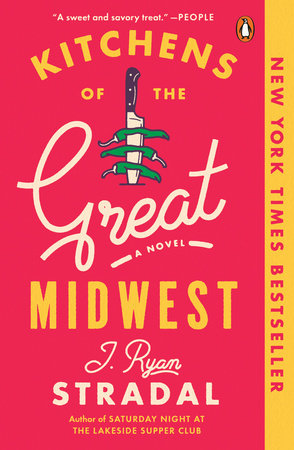
Join Cook the Books in June and July for Novels of the Great Midwest by J. Ryan Stradal. Simona (briciole) is hosting. Look for an announcement post soon at Cook the Books.